
Mural & Feature Wall Installation
A mural or feature wall is meant to be noticed. Whether it's a panoramic landscape, large-scale botanical, graphic design or dramatic designer wallcovering, the installation becomes a focal point of the room—and that makes planning and placement especially important.
With more than 30 years in the paperhanging trade, 7 Mile Paint & Paper approaches murals and feature walls as a complete composition. The wall, the artwork and the surrounding architecture are considered together before installation begins, with careful attention to scale, focal points, panel placement and the portions of the design that will ultimately draw the eye.
Precise measuring, proper wall preparation and accurate panel alignment are essential, but there's another consideration that can't be measured with a tape: how the finished wall should look and feel in the room.
The wall is the canvas. The installation brings the design into the room.
More Than a Large Piece of Wallpaper
A mural is different from a traditional repeating wallpaper pattern. Individual panels often work together to create one continuous image, which means every panel—and every inch of that panel—has a specific place within the finished design. There may be little room to adjust the material once installation begins.
Before the first panel is hung, I consider how the entire image will fit the wall. Ceiling height, wall width, focal points, furniture placement and architectural features such as windows, doors, fireplaces and built-ins can all affect where the most important elements of the design should land.
This becomes especially important when a mural is larger than the wall itself. Portions of the image may need to be trimmed away, and deciding where that material is lost can dramatically affect the finished composition. A face, flower, architectural detail or other important element that looks perfect on a computer screen may end up behind a doorway, cut into a corner or partially removed at the ceiling if the layout isn't considered beforehand.
Feature walls using large-scale repeating patterns require many of the same decisions. The pattern may need to be centered, balanced or deliberately positioned so the strongest elements relate naturally to the wall and the rest of the room.
The installation still requires accurate measuring, preparation and precise panel alignment—but with a mural, you're not simply matching a pattern. You're positioning an image.
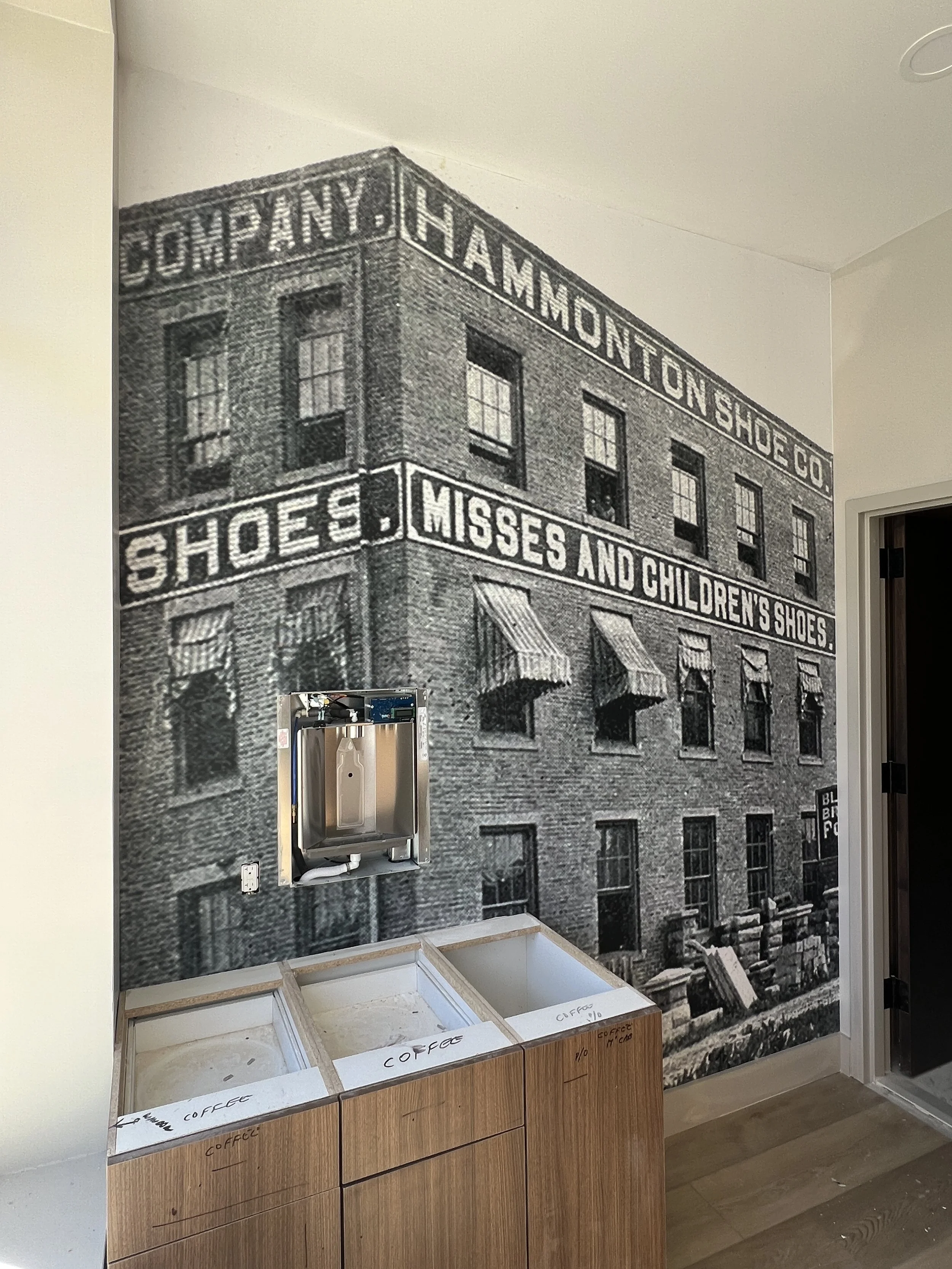
Every panel has a place.
Every detail affects the whole.
Composition Comes First
With a mural or feature wall, the center of the wall isn't automatically the center of the design. Before installation begins, I look at the artwork itself and determine which elements should command attention, where the eye naturally travels and how the image relates to the rest of the room.
Furniture, headboards, vanities, fireplaces, windows and other permanent or prominent features all influence the layout. A beautiful part of the design loses its impact if it disappears behind a headboard, while shifting the mural only a few inches may place that same element exactly where it belongs.
Corners require consideration as well. When a mural continues onto adjoining walls, the question isn't simply whether there is enough material to make the turn. The image needs to transition in a way that makes visual sense. With a single feature wall, the outer edges of the design need the same attention so the composition feels balanced within the available space.
Sometimes the mathematically centered layout is the right choice. Sometimes the visually centered layout is better. Experience means knowing the difference, and being willing to plan the installation around what the finished room needs rather than simply following a measurement.
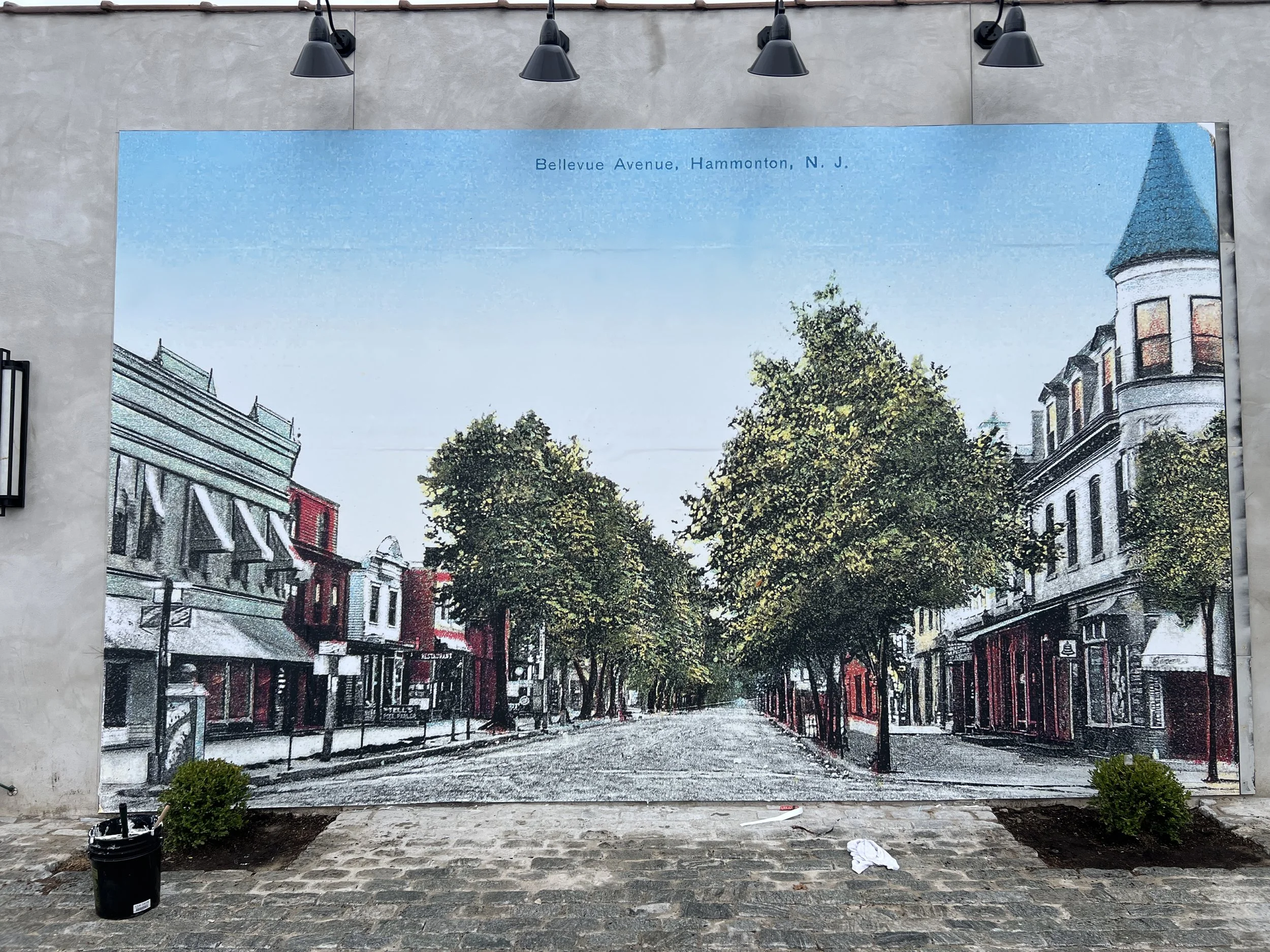
The tape measure establishes the dimensions.
The eye determines the composition.
Murals & Feature Walls We Install
Murals and feature walls can range from subtle, oversized patterns to artwork that completely transforms a room. Each presents different layout considerations, but they all benefit from planning the installation around the design rather than treating the material like ordinary repeating wallpaper.
Scenic & Panoramic Murals
Landscapes, architectural scenes and panoramic designs that extend across multiple panels to create one continuous composition.
Large-Scale Botanicals
Oversized florals, foliage and organic patterns where careful placement can determine which elements become the focal points of the finished wall.
Designer Feature Walls
Bold designer wallcoverings used to create a focal wall, with pattern placement planned around the architecture, furnishings and intended view of the room.
Custom & Personalized Murals
Made-to-order designs, photography and custom artwork produced specifically for a space, requiring accurate measurements and careful coordination before production and installation.
Paneled & Continuous Designs
Multi-panel wallcoverings where each panel connects to the next to form a larger image. Precise sequencing, alignment and placement are essential to maintaining the design.
Commercial & Hospitality Murals
Statement wallcoverings for restaurants, hotels, offices, retail and other commercial spaces where a mural can become part of the identity and atmosphere of the space.
A feature wall should do more than fill a space.
It should give the room a point of view.
Looking for the right mural?
7 Mile Paint & Paper also offers wallcoverings from select manufacturers. Whether you're working with an interior designer or choosing a wallcovering yourself, we can assist with product selection, measuring, material requirements and installation—bringing the project together from the first idea to the finished room.